

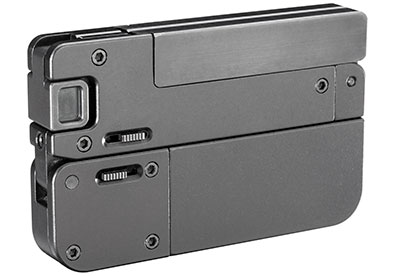
Understanding LifeCard Legality: Why This Folding Gun Raises Questions
The LifeCard is one of the most unique firearms ever created. With its sleek, credit card-sized design, this folding, single-shot .22LR or .22WMR pistol fits discreetly in a pocket, making it a standout in the world of everyday carry (EDC). But while its innovation and portability are game-changing, they also raise legal concerns in certain states. Unlike traditional handguns, the LifeCard’s folding mechanism and discreet appearance mean it may be subject to additional scrutiny.
At the federal level, the LifeCard is perfectly legal it’s not considered an AOW (Any Other Weapon) under the National Firearms Act, which means no special licensing is required. However, some states have more restrictive interpretations of concealed weapons or safety standards. The biggest concern? States that ban firearms that don’t resemble traditional guns or that have specific “roster requirements,” like California’s Handgun Roster, which the LifeCard doesn’t meet.
So, is the LifeCard legal everywhere? Unfortunately, no. That’s why a detailed, state-by-state breakdown is essential. If you’re considering this weapon for your personal defense kit or daily carry, you need to understand local laws before clicking “add to cart.”
State-by-State Breakdown: Where the LifeCard Is and Isn’t Allowed
The good news is that in most U.S. states, you can legally own and carry the LifeCard. But there are exceptions. Here’s a quick summary of where you stand:
| State | Legal Status |
|---|---|
| Texas | ✅ Legal – No restrictions |
| Florida | ✅ Legal – CCW permit required to carry |
| California | ❌ Not Legal – Not on handgun roster |
| Massachusetts | ❌ Not Legal – Fails state safety test |
| Maryland | ❌ Not Legal – Restricted firearm design |
| Arizona | ✅ Legal – Open and concealed carry OK |
| New York | ⚠️ Conditional – Local city laws apply |
| Illinois | ⚠️ Permit required – Check local ordinances |
| Oregon | ✅ Legal – Must follow state carry laws |
| Washington | ✅ Legal – With valid CPL |
Most of the U.S. permits ownership, but always confirm with your local sheriff’s department or attorney general’s website. Some states have vague laws about unconventional firearms that “do not look like guns” or can be “easily concealed.” These rules could apply to the LifeCard depending on how the firearm is interpreted under state code.
How to Legally Own a LifeCard: Step-by-Step Guide
If the LifeCard is legal in your state, here’s how to make sure you’re fully compliant with all ownership laws:
- Verify Local Law: Always check your state’s laws regarding handgun ownership, folding weapons, and CCW requirements.
- Purchase from a Trusted Dealer: Use a licensed firearm dealer like LifeCard22.org that ships in compliance with state laws.
- Get a Concealed Carry Permit (If Required): In many states, you’ll need a valid CCW to carry the LifeCard, even though it’s pocket-sized.
- Follow Safe Transport Rules: Keep it unloaded in a secure container when traveling across state lines.
- Understand Magazine & Ammo Restrictions: Some states limit what type of .22WMR or .22LR rounds you can carry.
These steps ensure your ownership remains legal and worry-free, allowing you to enjoy the innovation and security of the LifeCard without fear of violating local regulations.
Why Legal Clarity Matters When Carrying the LifeCard
Because the LifeCard doesn’t look like a traditional handgun, law enforcement and even trained professionals may misidentify it during inspections. This makes legal clarity even more important. Being stopped in a state where the LifeCard is banned, or where CCW laws are poorly understood, can lead to legal issues or firearm confiscation.
Carrying a legal firearm like the LifeCard requires the same discipline and respect for the law as any conventional handgun. It’s your responsibility as a gun owner to know where, when, and how you can legally possess or carry your weapon. Always stay informed and avoid assumptions what’s allowed in Nevada might be banned in New Jersey.
Final Thoughts: Stay Safe, Stay Smart, and Shop With Confidence
The LifeCard .22 is not just a novelty it’s a functional, reliable, and incredibly discreet self-defense tool. But owning one comes with responsibility. Understanding your state’s laws, acquiring the proper permits, and keeping documentation on hand will protect you legally and personally.
Ready to carry smarter? At LifeCard22.org, we don’t just sell folding guns we help you carry with confidence. Our compliance-first approach ensures your purchase is backed by real information and legal support.
[…] Q: Is the LifeCard folding pistol legal in all states?A: The LifeCard is legal in most U.S. states, but laws vary. Always check your local regulations or contact us before placing an order. […]
[…] Is the LifeCard legal in my state?A: In most states, yes. Because it’s a non-NFA item and not classified as an AOW (Any Other […]
Has anyone carried the LifeCard in New Jersey? I’d like to hear about your experience with law enforcement.
I have closed carry permit. Will pistol really handle 22 mag bullets with out hurting it.
Yes, the LifeCard can safely handle .22 Magnum ammunition, as long as you are using the LifeCard model that is specifically chambered for .22 WMR.
I’ll explain it plainly, the same way I would to a fellow concealed carry holder.
Will the LifeCard Handle .22 Magnum Without Being Damaged?
Yes. The LifeCard .22 WMR was designed and tested to fire .22 Winchester Magnum Rimfire safely. Trailblazer Firearms built the .22 WMR version to handle the higher pressure of .22 Magnum compared to .22 LR.
A few important things that make this possible:
The barrel uses a steel insert, not aluminum
The chamber is cut specifically for .22 WMR dimensions and pressure
The LifeCard is single-shot, which puts less stress on the firearm
The manual cocking system keeps everything controlled and simple
When you use quality factory .22 WMR ammunition, firing .22 Magnum will not harm the LifeCard.
One Important Safety Note
There are two different LifeCard models, and this matters.
LifeCard .22 LR
LifeCard .22 WMR
You should only fire .22 Magnum in the LifeCard marked .22 WMR. Firing .22 WMR in a .22 LR LifeCard is unsafe and should never be done. Always check the caliber marking on the barrel before loading.
Does the Small Size Make It Unsafe?
No. The compact size can be misleading, but smaller does not mean weaker.
The LifeCard’s simple design actually works in its favor. With fewer moving parts than a semi-auto pistol, there is less wear and fewer failure points. It was built for:
Occasional defensive use
Regular but reasonable practice
Long-term concealed carry without constant stress on the firearm
For most owners, the number of rounds fired over the life of the gun will be far below anything that could cause damage.
Is .22 Magnum a Practical Concealed Carry Option?
For many people, yes.
Concealed carriers often choose .22 WMR because it offers better penetration than .22 LR, manageable recoil, and solid performance from short barrels. In a lightweight and discreet firearm like the LifeCard, it makes sense for those who prioritize portability and simplicity.
As always, comfort, familiarity, and shot placement matter more than chasing a specific caliber.
Bottom Line
If you own the LifeCard .22 WMR, it is safe to fire .22 Magnum ammunition, and doing so will not damage the pistol when used correctly.
If you are unsure which model you have, check the barrel marking or reach out for confirmation before firing.
If you’d like, we can also point you toward .22 WMR ammo that performs well in short-barrel firearms like the LifeCard.