

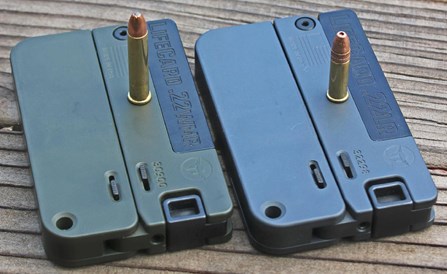
When it comes to personal defense, the concept of redundancy isn’t just smart-it’s potentially lifesaving. While your primary firearm handles most defensive scenarios, a backup gun serves as your insurance policy when things go wrong. The Trailblazer LifeCard, with its credit card-sized profile, presents a unique option in the backup gun category. But is it the right choice for you, and how do you use it effectively?
Why Carry a Backup Gun?
Before diving into the LifeCard specifically, let’s address the fundamental question: why carry a backup gun at all?
Your primary firearm can fail. Mechanical malfunctions, ammunition issues, or damage from a fall can render your primary weapon inoperable at the worst possible moment. A backup gives you a second chance.
Ammunition runs out. In extended defensive encounters, you might exhaust your primary magazine before the threat is neutralized. While reloading is ideal, sometimes transitioning to a backup is faster and more practical.
Access can be compromised. If you’re knocked to the ground, injured, or engaged in a struggle, reaching your primary holster might be impossible. A backup in a different location provides an alternative.
Certain situations demand different tools. Deep concealment environments, formal settings, or activities like running and hiking might make traditional carry impractical, but a ultra-compact backup can still be feasible.
When the LifeCard Excels as a Backup
The LifeCard isn’t trying to be everything to everyone. It fills a specific niche, and understanding where it excels helps you deploy it effectively.
Deep Concealment Situations
When you absolutely cannot print or reveal that you’re armed, the LifeCard’s 3.375-inch folded length makes it nearly invisible. Formal business attire, weddings, courtroom appearances, or any setting where even a subcompact pistol might be detected-this is where the LifeCard shines.
Professional security personnel and plainclothes law enforcement officers often find themselves in situations where looking completely unarmed is essential to their role. The LifeCard can disappear in a suit pocket, ankle holster, or even tucked into professional footwear.
Last-Ditch Defense Option
Think of the LifeCard as your “break glass in case of emergency” option. It’s not your first choice or even your second choice in most scenarios-it’s what you turn to when everything else has failed.
If your primary weapon malfunctions during a defensive encounter and you don’t have time to clear the malfunction or reload, transitioning to a LifeCard backup gives you one more opportunity to stop the threat. That single .22LR or .22WMR round might be all you need at close range.
Backup for Specific Activities
Outdoor enthusiasts face unique challenges. Trail runners can’t comfortably carry a full-size pistol. Hikers in bear country might carry a primary defensive weapon but want something ultra-light as insurance. Fishermen and kayakers need firearms that won’t weigh them down if they end up in the water.
The LifeCard weighs just 7 ounces fully loaded. It won’t slow you down, won’t throw off your balance, and provides peace of mind without the burden of traditional firearms.
Alternative Carry Locations
The beauty of backup guns is positioning them where your primary isn’t. If you carry your primary on your strong-side hip, consider the LifeCard in:
- Ankle holster: Classic law enforcement backup position, accessible even when seated or on the ground
- Opposite side pocket: Provides access if your strong side is pinned or injured
- Front pocket: Quick access while seated in vehicles
- Inside jacket pocket: Ideal for business attire or cold weather carry
How to Use the LifeCard Effectively as a Backup
Carrying a backup gun isn’t enough. You need a plan, training, and realistic expectations.
Training for Backup Gun Deployment
Your backup gun training should be separate from and supplementary to your primary firearm training. Here’s what to focus on:
Practice the Transition: Start with your primary in hand (or holstered), simulate a malfunction or empty magazine, then transition to drawing your LifeCard. Time yourself. The goal is smooth, deliberate movement-not speed at the expense of safety.
One-Handed Operation: You might be injured, holding someone, or using your other hand to create distance. Practice unfolding and firing the LifeCard with your dominant hand only, then practice with your non-dominant hand.
Unconventional Positions: Practice drawing and firing from the ground, from your back, while seated in a vehicle, and while moving backward. Defensive situations rarely happen while you’re standing still in a comfortable range position.
Stress Inoculation: Once you’re competent with the mechanics, introduce stress. Physical exercise before drawing (burpees, sprints), decision-making drills, or force-on-force training helps prepare you for the adrenaline dump of a real encounter.
Carrying Methods and Positioning
The LifeCard’s unique form factor opens up carry options that traditional backup guns can’t match.
Pocket Carry: The most common method. Use a quality pocket holster that covers the trigger guard and keeps the LifeCard properly oriented. Practice your draw stroke repeatedly-pocket carry can be slower than belt carry if you’re not trained.
Ankle Carry: Particularly effective when seated or kneeling. Modern ankle holsters designed for compact firearms work well with the LifeCard. Practice drawing while seated, as that’s the most likely scenario where you’d access an ankle-carried backup.
Inside Waistband (Alternative Position): If your primary is on your strong side hip, consider appendix carry or opposite-side IWB for your LifeCard. This keeps your backup accessible even if your primary side is compromised.
Specialized Concealment: The LifeCard’s size allows for creative carry options: inside a wallet holster, clipped inside a bag or purse (with proper holster), or in specialized concealment garments designed for ultra-compact firearms.
Tactical Considerations
Understand Your Effective Range: The LifeCard is a close-range tool. Realistically, you’re looking at 3-7 yards for defensive accuracy under stress. Beyond that, the short barrel, minimal sights, and single-shot limitation make it less effective. Train at realistic defensive distances.
The Single-Shot Reality: You get one chance. This isn’t a spray-and-pray situation. Your shot placement must be precise. This limitation actually reinforces good defensive habits-you can’t afford to miss, so your fundamentals must be solid.
When to Transition vs. Reload: If your primary malfunctions, your decision tree should typically be: attempt immediate action drill, tactical reload if time permits, then transition to backup if the situation is urgent and close-range. The LifeCard is your “things have gone very wrong” option.
Communication: If you’re with others (family, partners, team members), ensure they know you carry a backup. In the chaos of a defensive situation, you don’t want confusion about who’s armed or where weapons are positioned.
Understanding Limitations
Let’s be completely honest about what the LifeCard is and isn’t.
It’s a single-shot firearm. Once you fire, you’re manually reloading. In a dynamic situation, this is a significant limitation. You must make that one shot count, or you need to immediately create distance and reload.
It’s chambered in .22 caliber. Whether you choose .22LR or .22WMR, you’re not working with a traditional defensive caliber. Shot placement becomes absolutely critical. The advantage is manageable recoil and the ability to make accurate shots under stress, but you need to be realistic about terminal ballistics.
Deployment takes time. The LifeCard must be unfolded before firing. This adds precious seconds to your draw stroke. Practice until the motion is automatic, but accept that it will never be as fast as drawing a traditional pistol from a holster.
It’s not a primary defensive tool. The LifeCard fills a specific role. It’s insurance, not your frontline defense. Your primary firearm, training, awareness, and avoidance are all more important than any backup gun.
Real-World Perspectives
Firearms instructors consistently emphasize that backup guns are only as good as your training with them. Carrying a LifeCard in your pocket without ever practicing deployment is false confidence. Several defensive firearms experts note that the value of any backup gun-including the LifeCard-is in providing options when your primary plan fails.
Law enforcement professionals who carry backup guns typically practice with them monthly, not just annually. The muscle memory for drawing from an ankle holster or pocket is different from your primary draw, and those neural pathways degrade without regular reinforcement.
The consensus among those who carry backup guns professionally: if you’re not willing to train with it regularly, don’t carry it. The LifeCard’s simplicity-no manual safety to forget, straightforward operation-makes it easier to maintain proficiency, but it still requires dedicated practice.
Who Benefits Most from the LifeCard as a Backup?
The LifeCard serves specific users exceptionally well:
Professionals requiring deep concealment who need a truly invisible backup option but can’t risk being unarmed.
Outdoor enthusiasts who need ultralight emergency protection without the weight and bulk of traditional firearms.
Concealed carriers in restrictive environments where even compact pistols are difficult to conceal effectively.
Those with physical limitations who find traditional backup guns too heavy or bulky but still want emergency defensive capability.
Experienced shooters who understand the LifeCard’s limitations and have the training to use it effectively within those constraints.
Final Recommendations
The LifeCard as a backup gun is a study in specialization. It doesn’t try to do everything, and that’s precisely why it succeeds in its intended role.
If you decide the LifeCard fits your backup gun needs, commit to proper training. Dry fire practice (with snap caps) should be frequent-at least weekly. Live fire practice monthly keeps your skills sharp. Focus on fundamentals: proper grip despite the small size, trigger control, and most importantly, shot placement.
Consider your overall defensive strategy. The LifeCard works best as part of a layered approach: situational awareness to avoid trouble entirely, a quality primary firearm for general defensive needs, and the LifeCard as your last-resort backup when everything else has failed.
Carry it consistently. A backup gun left at home because it’s “too much trouble” is useless. The LifeCard’s entire design philosophy centers on being so small and light that you’ll actually carry it every day, in situations where traditional backups stay home.
Remember that any gun is better than no gun, but proper training and realistic expectations are what transform a piece of equipment into an effective defensive tool. The LifeCard gives you options when you need them most-but only if you’ve put in the work to use it effectively.
Stay safe, train regularly, and understand both the capabilities and limitations of your tools. The LifeCard isn’t the right backup gun for everyone, but for those it fits, it might just be the perfect insurance policy.